
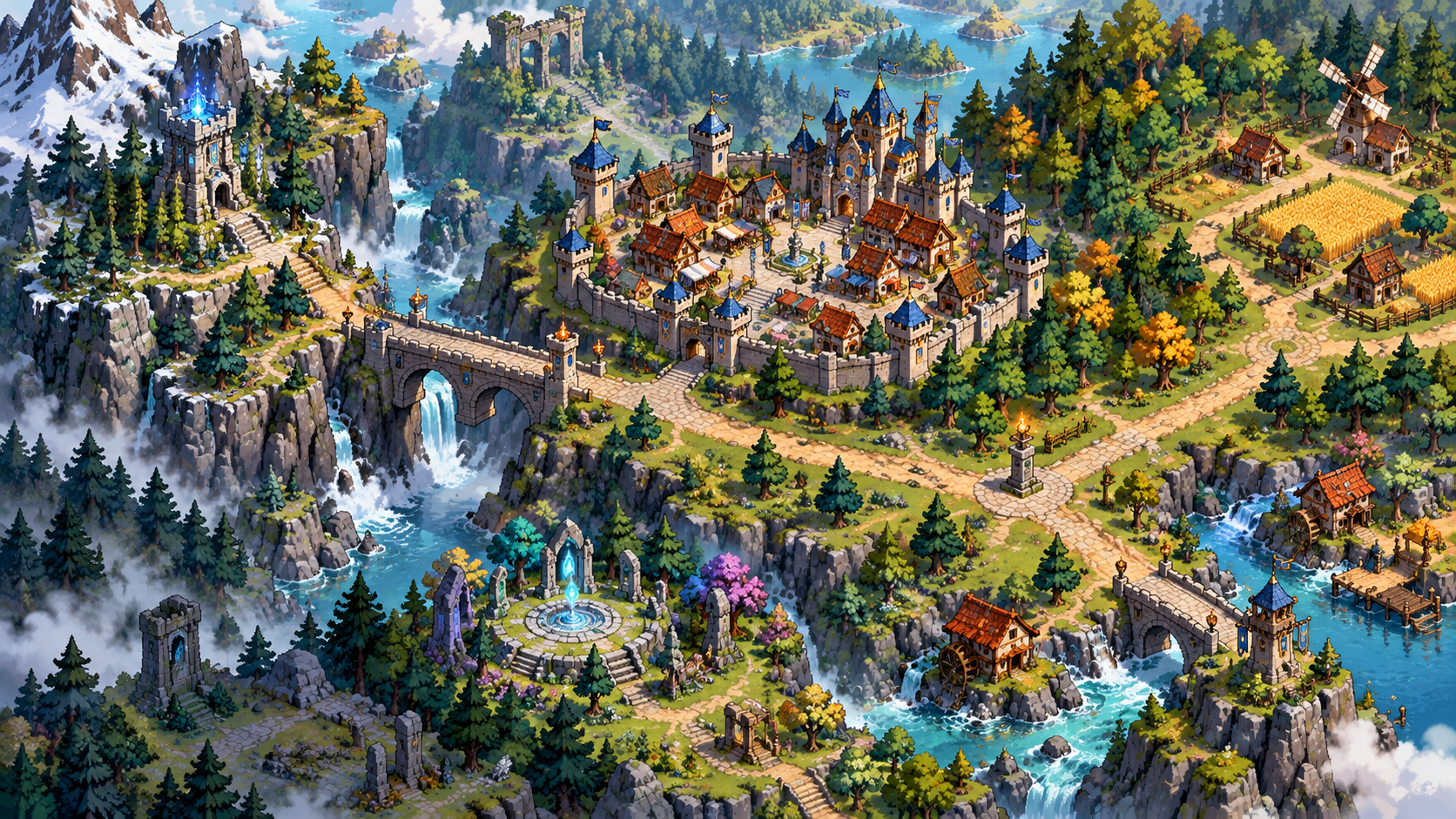
The confirmed simulation foundation
The Steam store describes an underlying world simulation connected to the game’s editor families. The important distinction is that the simulation works with content the player defines: races, cultures, religions, factions, NPCs, animals, monsters, items, weapons, armor, accessories, maps, POIs, and zones.
The main mode does not automatically create the whole world for you. Official launch Q&A says the player must build and design it. Once that foundation exists, the simulation can produce relationships, needs, movement, quests, crafting, political decisions, and conflict. A more autonomous Box Mode is a future roadmap feature.
NPC and population behavior confirmed in official patches
| Area | Confirmed behavior | Evidence boundary |
|---|---|---|
| Needs | Hunger, nutrition, favorite foods, homes, sleep, and population growth | Pre-release patch notes; balance may change |
| Life cycle | Relations, families, children, adulthood, aging, and lifespans | Pre-release simulation updates |
| Professions | Initial civilian jobs included farmers, miners, and loggers | Names are confirmed; the full profession list is not |
| Heroes | Heroes can accept and finish quests, gain equipment, flee danger, and join armies | Official demo patches and war update |
| Crafting | Factions craft food, items, weapons, and armor and distribute equipment | Official simulation patches |
| Traits | Personality and group traits influence evaluation, voting, diplomacy, and war choices | Official pre-release trait and government update |
Factions, diplomacy, and world change
Factions are a major decision-making layer. Official updates document alliances, trade, wars, zone capture, currency, crafting, government types, rulers, zone leaders, noble houses, succession, armies, morale, and peace settlements. Culture, religion, race restrictions, and traits can influence how factions evaluate one another and which actions they support.
The pre-release war system used explicit goals such as conquest, liberation, tribute, and humiliation. Wars could change eligible zone ownership, return territory, impose payments, or affect prestige. Those details show the intended depth, but they remain especially sensitive to Early Access balancing and should not be treated as permanent formulas.
How to observe and diagnose your world
The most useful confirmed tools are the Region, Faction, Zone, and Creature inspectors plus the World Event Log. They expose information about ownership, population, characters, rulers, wars, captures, and other changes. When behavior looks wrong, inspect the relevant place, group, and creature before changing multiple editors at once.
- Identify whether the problem belongs to a creature, POI, zone, faction, or world-level event.
- Use the matching inspector and event log to look for needs, ownership, pathfinding, conflict, or decision context.
- Change one definition at a time so you can see which editor actually affected the outcome.
- If the result appears to be a bug, compare it with current Steam announcements and report it through the official discussions or Discord.
These are diagnostic principles, not undocumented control instructions. The current interface remains the authority for where each inspector is opened.
Official sources
- Fantasy World Manager on Steam — official Early Access description, editor list, platform information, and confirmed scope
- Fantasy World Manager Steam announcements — developer launch posts, demo patch notes, and roadmap clarifications
Frequently asked questions
Will NPCs build the entire world automatically?+
The official launch Q&A says no: the main mode requires the player to build and design everything. A more autonomous Box Mode is planned for a later update.
Do NPCs have needs and families?+
Official simulation patches confirm hunger, nutrition, homes, sleep, relationships, families, children, adulthood, aging, and lifespans. Exact balance can change during Early Access.
Can factions trade or go to war?+
Yes. Official updates document alliances, trade, wars, zone capture, armies, war goals, and peace settlements, with traits and government types influencing decisions.
How can I tell why something happened?+
Use the confirmed Region, Faction, Zone, and Creature inspectors together with the World Event Log. Their exact location may change as the Early Access UI evolves.
Related guides
POI and Zones Explained
Understand how points of interest and zones organize locations, territory, and the spaces where the simulation unfolds.
Classes and Biomes
Use the confirmed Early Access scope of 18 classes and 21 biomes as a starting point for planning distinct worlds.
World Editor Guide
Explore the tools for building overworlds, interiors, dungeons, and the places that connect them into a coherent setting.
Beginner Guide
Get oriented with the creator-led main mode, major editors, and simulation foundation before shaping your first living fantasy world.